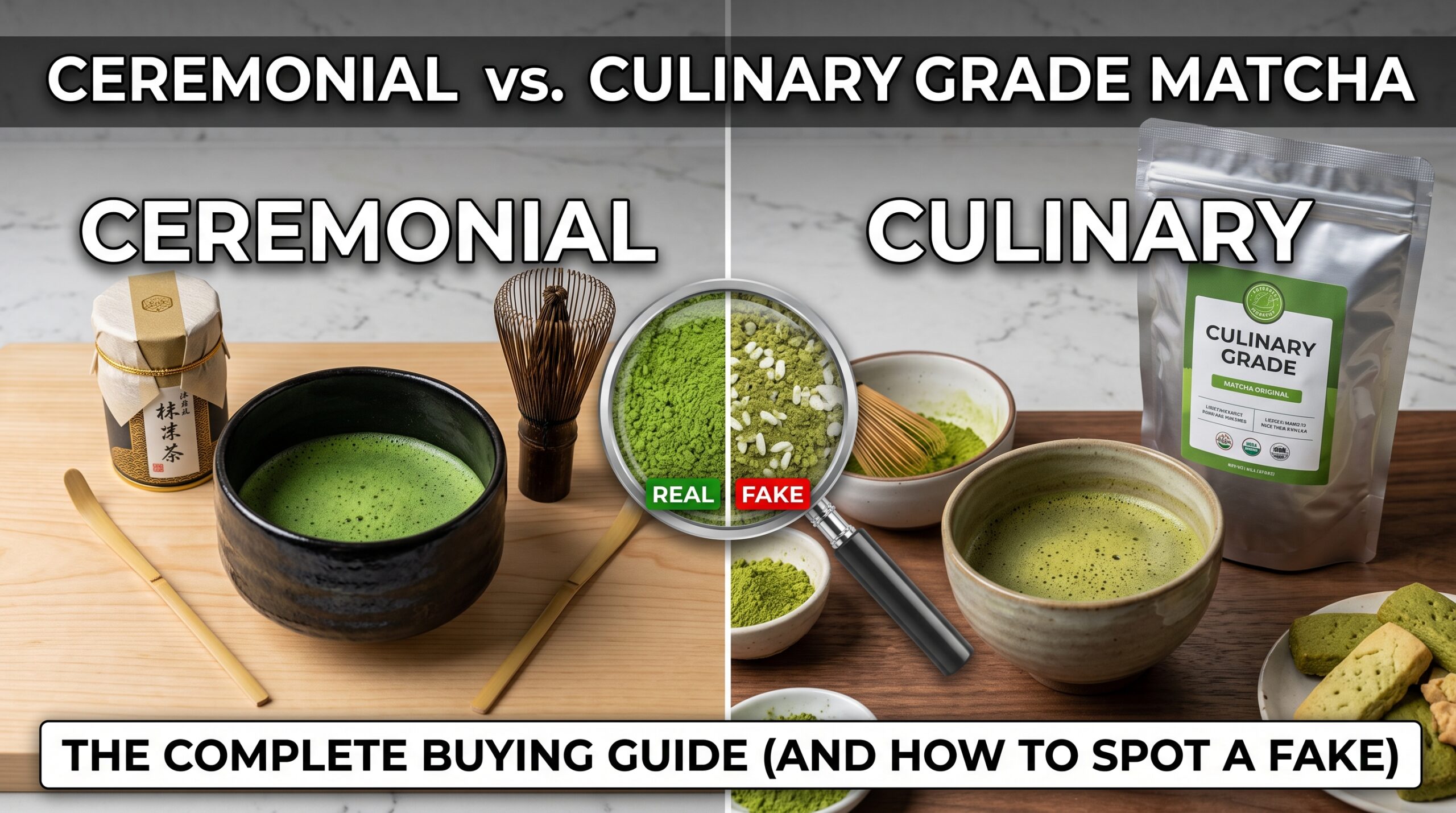
Wait — Is “Ceremonial Grade” Even a Regulated Term?
Short answer: no. There’s no Japanese government agency, no international standards body, nobody stamping tins with an official “yes, this is truly ceremonial” seal. The terms “ceremonial,” “premium,” and “culinary” started as loose industry shorthand for how a batch of matcha was grown and processed — but there’s nothing stopping a company from slapping “ceremonial grade” on whatever’s in the bag. It’s basically the tea world’s version of “artisanal” or “gourmet” on a bag of chips — it can mean something real, but it’s also just a word a marketing team picked.
That doesn’t mean the underlying differences aren’t real, though. Genuine high-grade matcha really is grown, harvested, and milled differently than the cheap stuff — you just can’t trust the label alone to tell you which one you’re holding. You have to know what to actually look for, which is what the rest of this guide is for.
The Real Grades You’ll Actually Run Into (There Are Three, Not Two)
Most beginner guides — including our own beginner’s guide to matcha — simplify this down to “ceremonial vs. culinary” because that’s the two-option version most shoppers actually see. But if you look at how tea producers really talk about it, there’s a third tier hiding in the middle that a lot of “latte” and “barista” matcha quietly falls into.
| Grade | Color | Particle size | Harvest | Typical price | Best for |
|---|---|---|---|---|---|
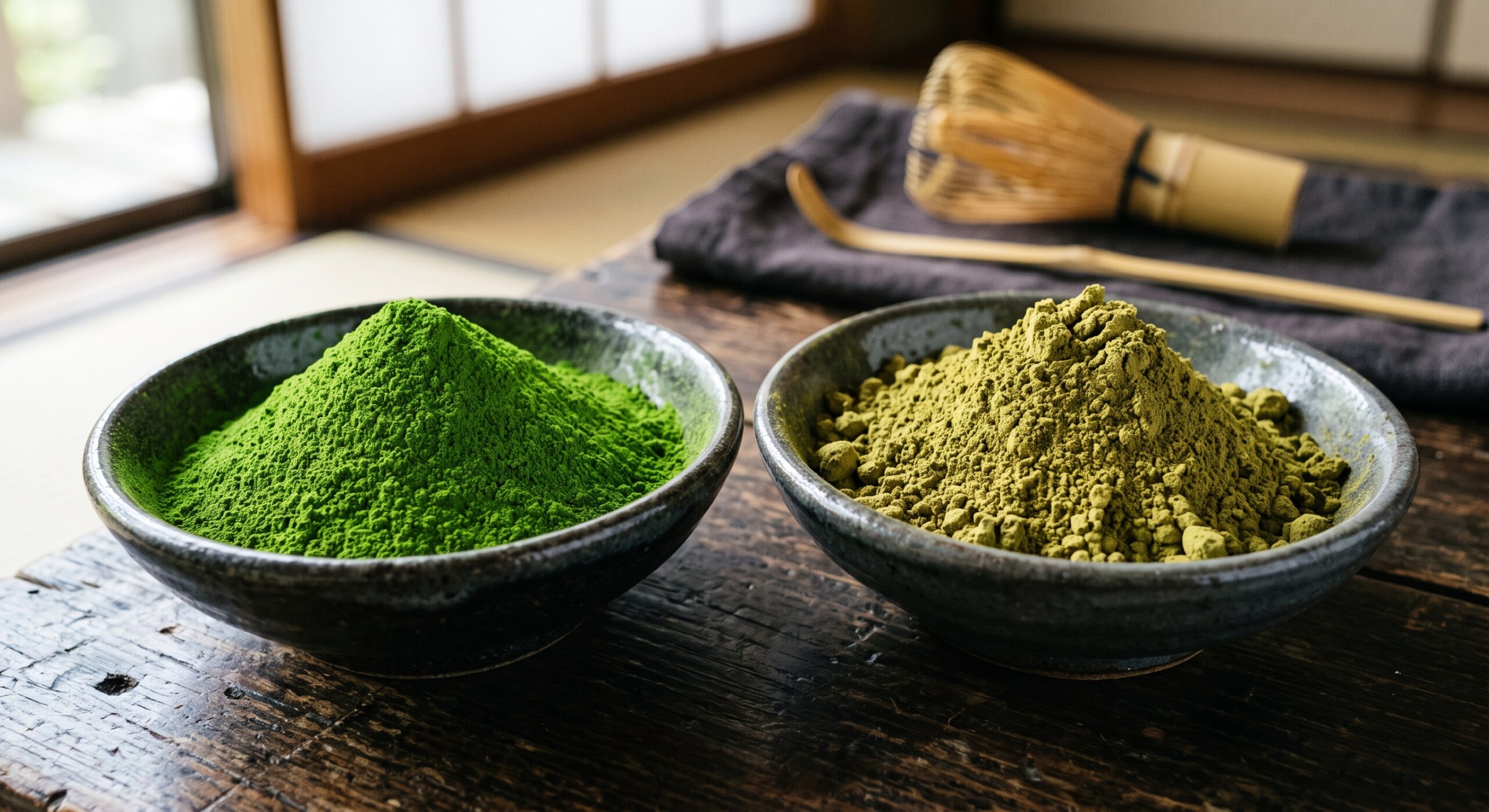
| Ceremonial | Vivid emerald | ~5–10 microns | First flush (spring), ichibancha | ~$1–2+ per gram | Whisking with water, drinking solo |
| Premium / “Latte grade” | Bright green | ~10–15 microns | Second harvest (early summer) | Mid-range | Lattes, mixed drinks |
| Culinary | Duller, olive-toned | ~15–20 microns | Third/fourth harvest (mid-late summer) | Most affordable | Baking, smoothies, cooking |
How to Spot Fake or Mislabeled “Ceremonial” Matcha
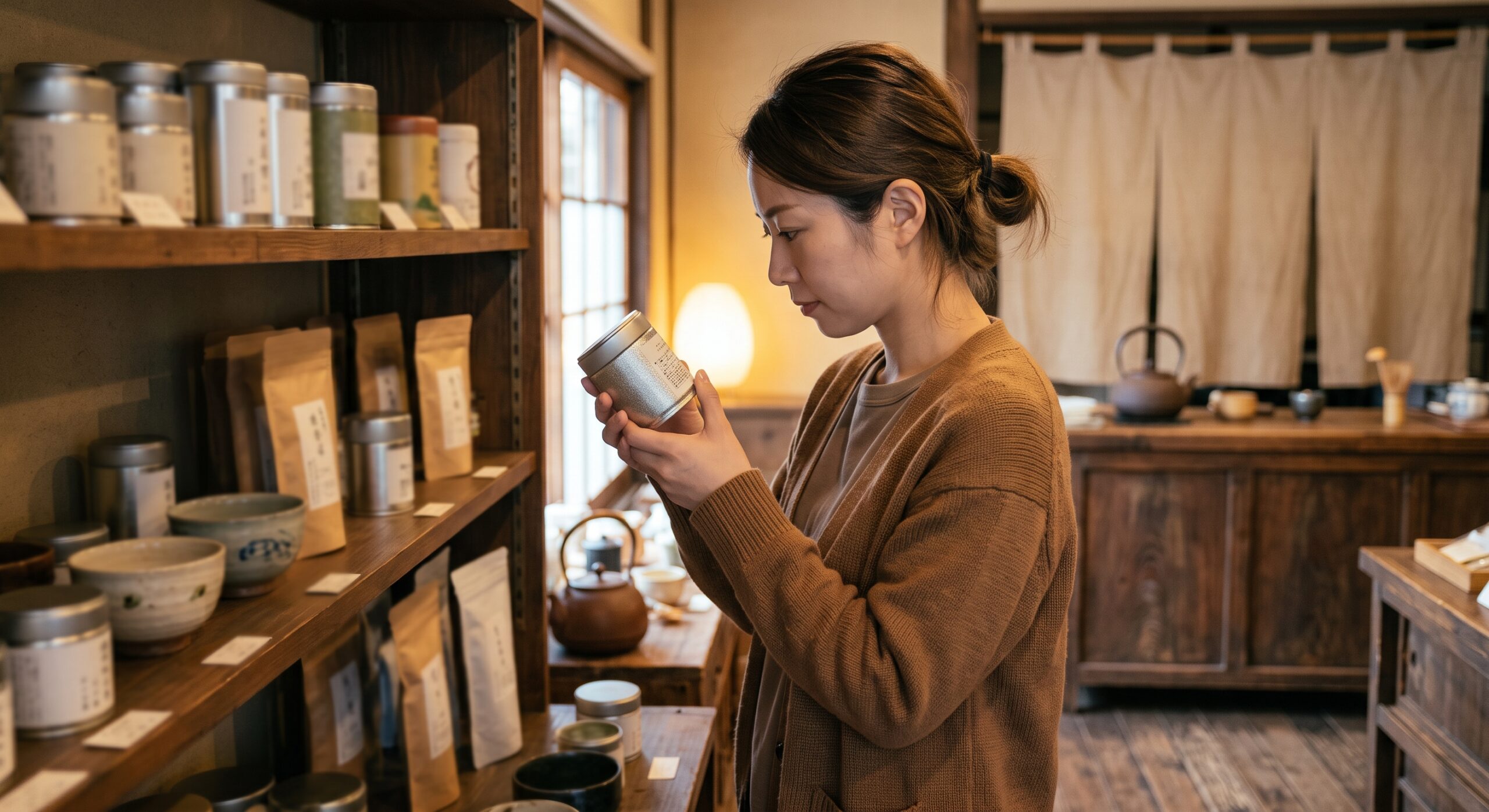
You don’t need a lab to figure out if a tin is lying to you. A few quick checks will get you most of the way there, whether you’re standing in a shop in Kyoto or scrolling through a listing at home.
Does Growing Region Actually Matter?
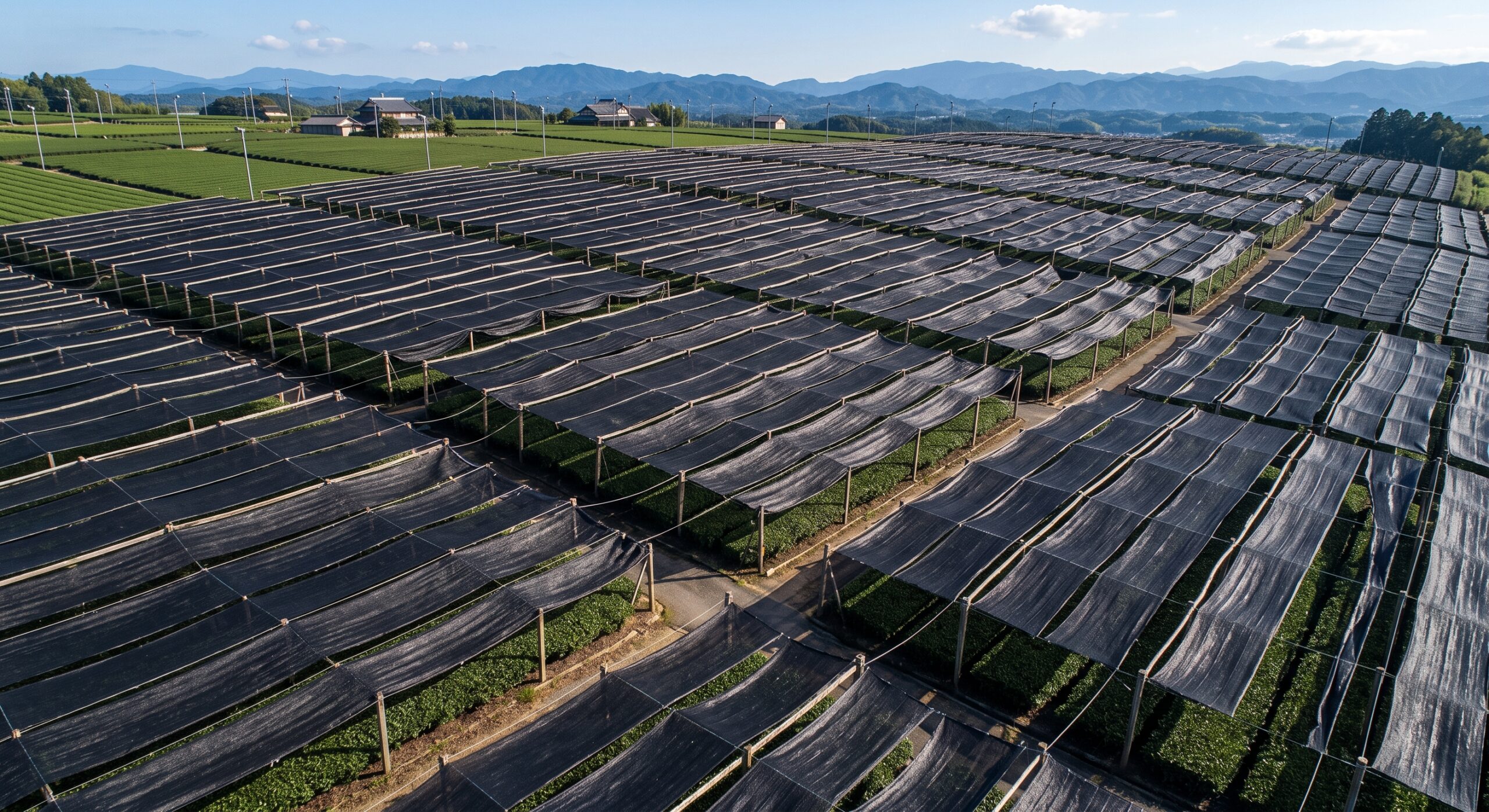
Yes, but maybe not in the way you’d guess. Uji (just south of Kyoto) is matcha’s spiritual hometown and still the name that carries the most weight — expect bright, intense flavor with strong umami and a distinct fragrance locals call “mist aroma.” But here’s the twist most tourists never hear: “Uji tea” isn’t legally limited to tea physically grown within Uji’s city limits. Under the actual criteria, tea can qualify for the Ujicha name if the leaves come from Kyoto, Nara, Shiga, or Mie prefecture, as long as the processing happens in Kyoto using traditional methods. So that “Uji matcha” tin might be grown an hour away and still be 100% legitimate — it’s a regional designation, not a single-town guarantee.
Beyond Uji, a few other regions are worth knowing. Nishio (Aichi Prefecture) is historically Japan’s second-biggest matcha name, known for a smooth, balanced flavor that’s easy to drink daily. Kagoshima, way down south, actually produces more raw matcha material than anywhere else in Japan these days — it’s sunnier and more efficient to farm, which makes it rich and a little sweeter, and generally more affordable. Yame (Fukuoka) is a quieter name that serious tea people rate highly for full-bodied, fragrant matcha, and Shizuoka mostly focuses on sencha but produces small amounts of lighter, more delicate matcha on the side.
None of this means “Uji or bust.” A well-made Kagoshima matcha can easily beat a mediocre, overpriced Uji-labeled tin. Region is a helpful clue, not a guarantee — pair it with the label checks above.
How to Choose Based on What You’re Actually Going to Do With It
Honestly, the biggest mistake people make isn’t buying “fake” ceremonial grade — it’s buying the wrong grade for their actual use case and then being disappointed. Work backwards from what’s actually going in your cup.
🍵 Get Ceremonial Grade If…
- You’re whisking it with just hot water and drinking it straight
- You want the smoothest, least bitter flavor possible
- You’re gifting it or bringing it home as a souvenir
- You don’t mind paying more per gram for the experience
🥤 Get Culinary (or Latte) Grade If…
- You’re mixing it with milk, oat milk, or into a smoothie
- You’re baking it into cookies, cakes, or ice cream
- You go through matcha fast and want better value per gram
- You honestly can’t taste the difference once sugar’s involved (most people can’t)
Frequently Asked Questions
Is ceremonial grade always “better” than culinary grade?
Not really — they’re built for different jobs. Ceremonial grade is smoother and less bitter when whisked with plain water, but that subtlety gets completely lost once you add milk, sugar, or heat it into baked goods. Culinary grade’s bolder, slightly bitter flavor actually holds up better in those situations. “Better” depends on what you’re making.
I bought “ceremonial grade” and it still tastes bitter — did I get scammed?
Maybe, but check your technique first. Water that’s too hot (boiling instead of around 80°C/176°F) will scorch even genuinely great matcha and make it bitter. Also check how old it is — matcha loses its sweetness and turns more bitter within a few months of opening, especially if it hasn’t been kept airtight and refrigerated.
Does “organic” mean higher quality matcha?
Not automatically. Organic certification is about farming methods (no synthetic pesticides or fertilizers), not about grade, particle size, or flavor. You can absolutely find organic culinary-grade matcha and non-organic ceremonial-grade matcha. They’re separate labels answering separate questions.
How should I store matcha to keep it fresh?
Keep it sealed, away from light and heat, and ideally in the fridge once opened — matcha is basically a sponge for odors and moisture. Try to use it within a couple of months of opening for the best flavor, and always reseal the tin tightly right after scooping.
Can I use culinary-grade matcha for a real tea ceremony?
You can, and nobody’s going to stop you, but it’s not really what it’s built for. Culinary grade tends to taste noticeably more bitter and less smooth when whisked with just water, which is the whole point of a ceremonial-style bowl. If you’re doing a proper usucha at home, it’s worth splurging on true ceremonial grade for that specific use.
The Bottom Line
“Ceremonial grade” is a real quality tier, but it’s also an unregulated marketing term — which means the label alone can’t be trusted. Check the color, the ingredient list, and the origin info before you check the price tag, and buy based on what you’re actually going to do with the matcha rather than which word sounds fanciest on the tin. Get that right, and you’ll stop overpaying for hype and start actually getting what you’re paying for.

Comments