What Is Matcha, Exactly?
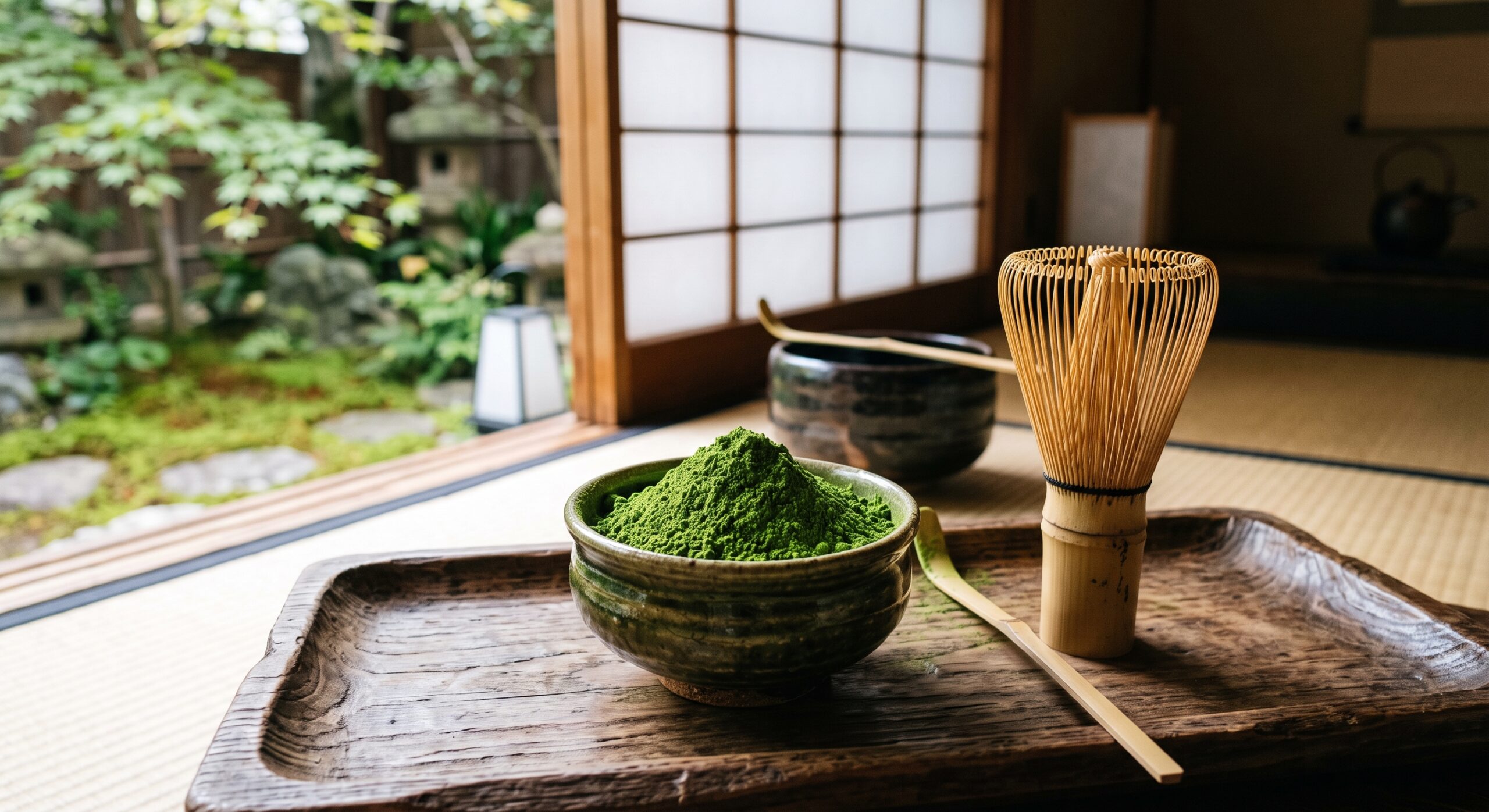
Okay, real talk: matcha is not just “green tea, but fancier.” It’s a totally different animal. With regular green tea (sencha, the stuff in most tea bags), you steep whole leaves in hot water, then toss the leaves and drink the liquid. You’re basically only getting what leaches out. Matcha skips that step entirely — the leaves are ground into a super-fine powder, and you whisk that powder straight into water. So you’re drinking the entire leaf, not just tea-flavored water. That’s why it hits harder, tastes more intense, and has more caffeine and antioxidants per serving than a cup of steeped green tea.
The plants themselves are also babied in a specific way. For the last three or four weeks before harvest, farmers cover the tea bushes with shade cloth (or old-school straw screens) to block out sunlight. Less sun means the plant panics a little and pumps out more chlorophyll, which is why matcha is that almost unnaturally vivid green. It also produces more L-theanine, an amino acid that gives matcha its naturally sweet, savory flavor — tea people call it “umami,” which is a fancy way of saying “it tastes rich, not bitter.” After harvest, the leaves get steamed fast (to stop them from oxidizing), dried, and stripped of stems and veins. What’s left is called tencha. Only then does it get stone-ground — slowly — into the fine powder you actually buy.
A Brief History: From Song China to Uji, Kyoto
Powdered tea didn’t actually start in Japan — it came from Song-dynasty China, where people were already whisking tea powder into water. It made its way to Japan around the 12th century, thanks to a Zen monk named Eisai who brought tea seeds back from his travels, mostly because he thought it was good for meditation and health (turns out he wasn’t wrong). Tea cultivation eventually landed in Uji, just south of Kyoto, and the area happened to have the perfect setup for it — misty mornings, river fog, sloped hillsides. Basically, tea plants loved it there.
Sometime around the 1400s or 1500s, growers in Uji figured out the shading trick mentioned above, and that changed everything — it turned regular tea into something sweeter and way more refined, which is basically the matcha we know today. Around the same time, a tea master named Sen no Rikyu formalized chanoyu, the Japanese tea ceremony, and matcha went from “just a drink” to the centerpiece of an entire cultural practice. Uji still gets treated as matcha’s spiritual home base, and if you see “Uji matcha” on a label, that’s a genuinely good sign.
Ceremonial vs. Culinary Grade: What’s the Difference?
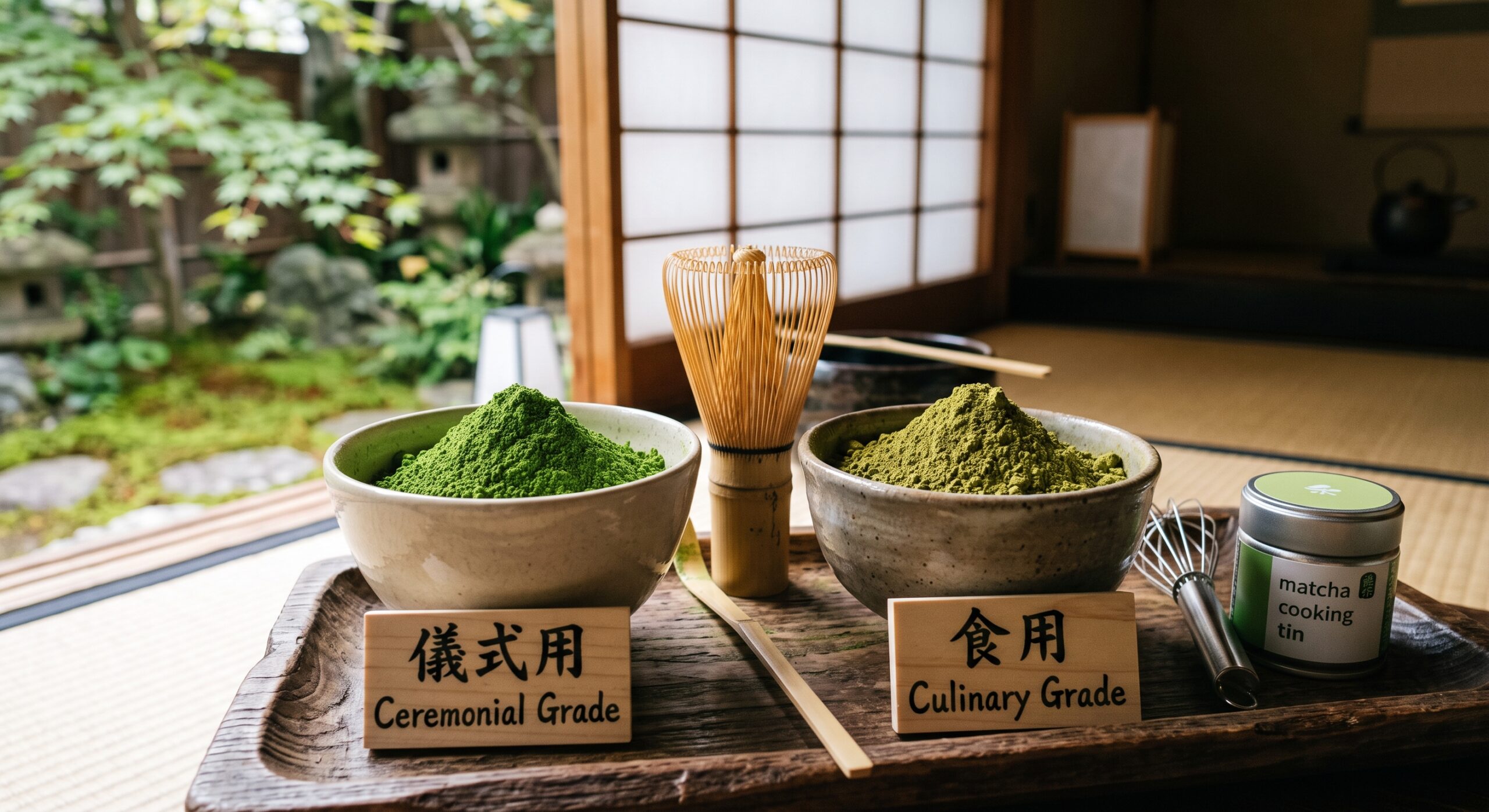
Walk into pretty much any tea shop in Japan and you’ll see matcha split into two camps: “ceremonial grade” and “culinary grade.” Nobody’s officially regulating these terms, but in practice, the difference is real, and it matters for what you’re actually going to do with it.
🍵 Ceremonial Grade
- Made from the youngest, first-flush leaves — shaded the longest
- Ground painfully slowly on stone mills to protect the flavor
- Bright, almost glowing jade-green color
- Naturally sweet and umami, barely any bitterness
- Meant to be whisked with hot water and sipped on its own
- Usually $25–$50+ per 30g
🥤 Culinary Grade
- Comes from slightly older or lower-positioned leaves
- Deeper, more olive-toned green
- Bolder, more bitter, earthier flavor
- Doesn’t get lost when mixed with milk, sugar, or other stuff
- Your go-to for lattes, smoothies, and baking
- Usually $10–$25 per 30g
The 2026 Matcha Shortage: What Travelers Should Know
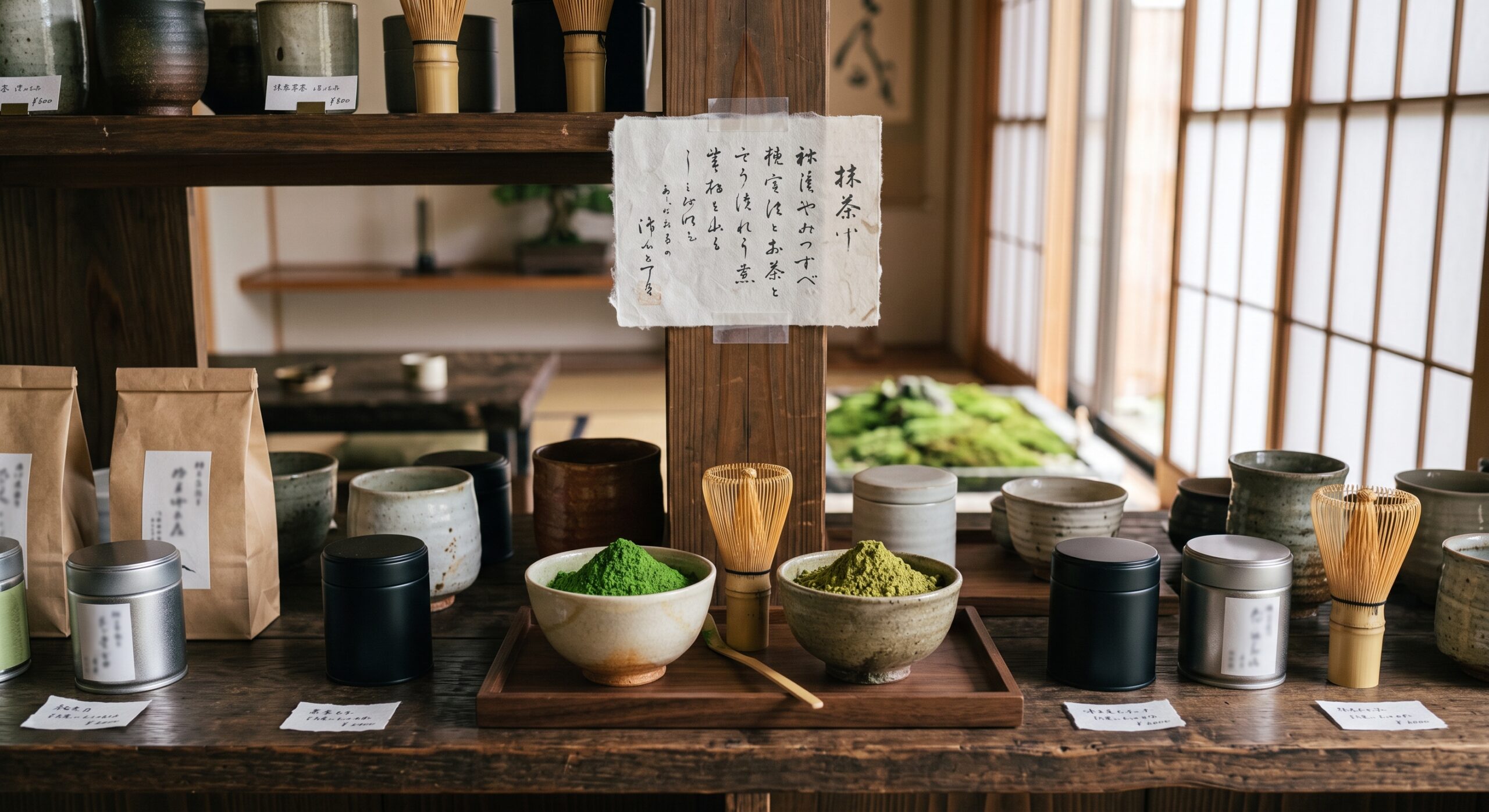
If matcha’s felt more expensive lately, or your favorite café started rationing it, you’re not imagining things — there’s a genuine shortage going on. Japan’s tea-farming workforce has shrunk from around 54,000 people in 2000 to roughly 20,000 today, and at the same time, global demand has exploded (green tea exports blew past ¥29 billion in a single recent year). Meanwhile, domestic tea drinking in Japan has actually gone down. Add in the fact that matcha can only be harvested once a year, in spring, and that the shading-plus-stone-grinding process is deliberately slow (top mills crank out maybe 30–40 grams an hour — yes, really), and you’ve got a supply chain that just can’t keep up.
The result: tins that used to run around ¥1,500 now sell for ¥6,000–¥6,500, and a lot of specialty shops in Kyoto and Uji have started limiting purchases to one tin per customer, mostly to stop resellers from cleaning out the shelves. If you’re planning to bring some real Japanese matcha home, here’s how to not get frustrated:
Matcha vs. Coffee: Caffeine, Focus, and Energy
A standard 2-gram serving of matcha — roughly one traditional bowl — has about 60–70mg of caffeine. That’s noticeably less than an 8-ounce cup of drip coffee (95–200mg), but honestly pretty close to a shot of espresso (63–75mg). But here’s the thing: the caffeine amount isn’t really the interesting part. It’s how your body actually feels it.
| Drink | Typical caffeine | Energy pattern |
|---|---|---|
| Drip coffee (8oz) | 95–200mg | Fast spike, crash in 2–3 hours |
| Espresso shot | 63–75mg | Fast spike, short-lived |
| Matcha (2g) | 60–70mg | Slow release over 4–6 hours |
That smoother ride comes down to L-theanine, the amino acid we mentioned earlier that shows up in shade-grown tea leaves. L-theanine nudges your brain into more alpha-wave activity — basically the same relaxed-but-alert zone you’d hit during meditation — and it takes the edge off the jittery, anxious feeling caffeine can give you on its own. Some studies even suggest the caffeine-plus-L-theanine combo in matcha beats caffeine alone for staying focused on a task. It’s why people describe matcha as “calm energy” instead of the jittery jolt you get from a double espresso.
How to Prepare Matcha at Home
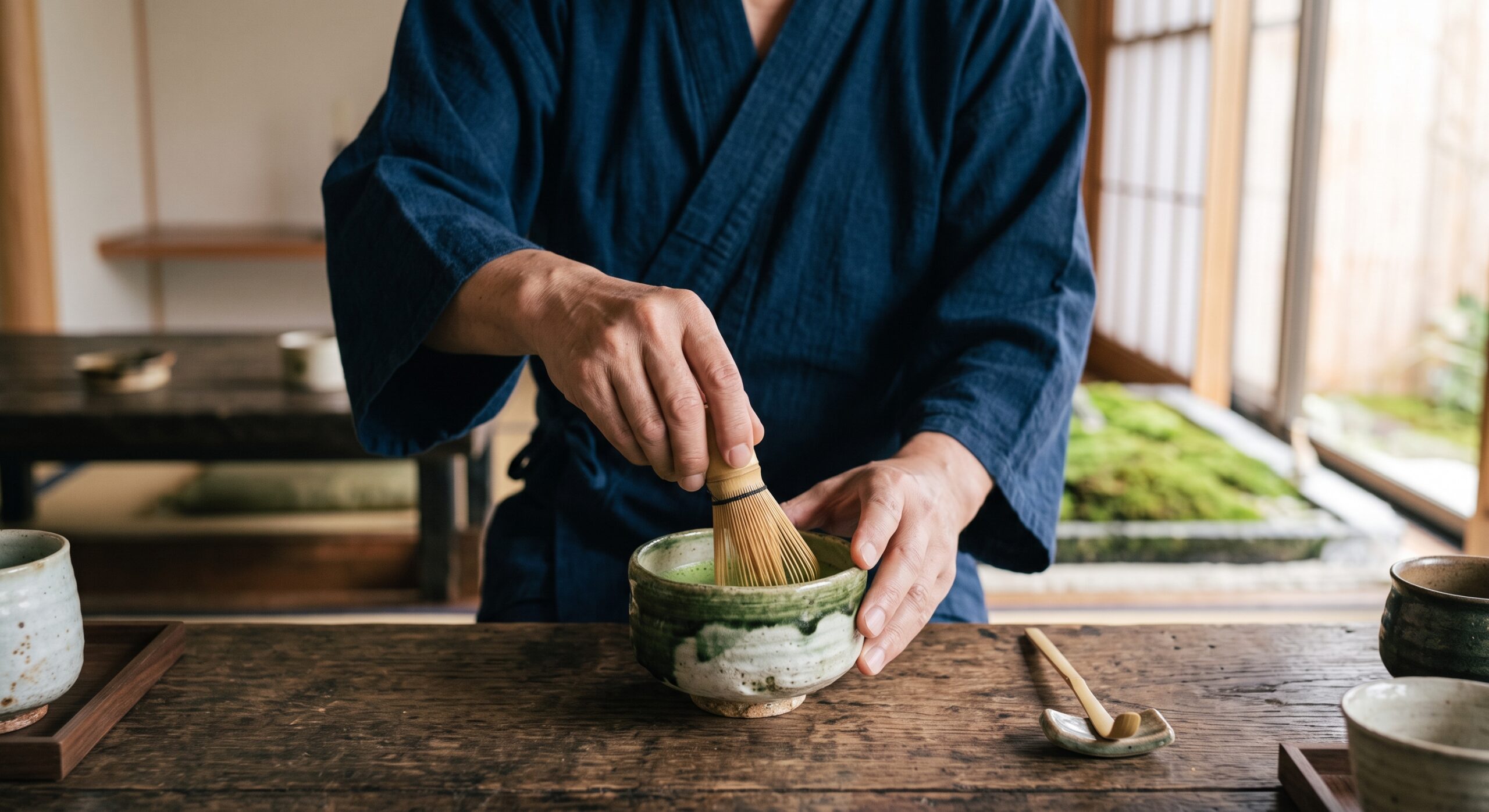
You don’t need to book a flight to Kyoto or learn an entire ceremony to make a decent bowl of matcha at home. The basic method is called usucha, or “thin tea,” and it’s genuinely beginner-friendly once you’ve done it a couple times.
Don’t have a chasen or chawan lying around? A small milk-frother and any wide, shallow bowl will get you most of the way there while you figure out if you’re actually going to keep drinking this stuff regularly.
Where to Buy Authentic Matcha in Japan
Uji and Kyoto are still your best bets for buying genuinely good matcha straight from the source, with Nishio (Aichi) and parts of Shizuoka close behind. Skip the souvenir shops and airport gift stores if you can — specialty tea shops almost always have fresher stock, better selection, and staff who can actually point you toward the right grade for what you want. We’re working on individual café and shop guides for Uji and Kyoto (exact locations, whether they speak English, current purchase limits, all of it) — check back soon, or peek at the related guides below.
Frequently Asked Questions
Is matcha good for you?
Matcha’s loaded with catechins (especially one called EGCG), an antioxidant that’s been studied for potential heart and metabolic benefits, plus chlorophyll and L-theanine. Like anything with caffeine, moderation’s the move — most guides land on 1–2 servings a day as a reasonable amount for most healthy adults.
Does matcha have sugar?
Nope — pure matcha powder has zero added sugar. Any sweetness you taste comes naturally from L-theanine. That said, bottled matcha drinks or café matcha lattes often have sugar or sweetened milk mixed in, so check the label or just ask for it unsweetened if that’s a concern.
Can I bring matcha home from Japan in my luggage?
Yeah, generally you’re fine — matcha’s a processed, dried food item, so it’s usually allowed in checked and carry-on bags heading to the US, UK, EU, Australia, and most other places. Rules do shift around, though, so it’s worth a quick check of your home country’s customs site before you fly, especially if you’re bringing back a lot of it.
Why is matcha suddenly so expensive?
A shrinking pool of Japanese tea farmers, a slow and genuinely labor-intensive production process, and a big spike in global demand have all collided to create a real shortage since around 2024–2025. Prices for decent matcha have climbed noticeably, and plenty of shops now cap how much you can buy in one visit.
The Bottom Line
Matcha isn’t just “green tea, powdered” — it’s a genuinely old craft built on shade-grown leaves, stone-milling, and a completely different way of drinking tea than what most of the world’s used to. Whether you end up sipping a proper ceremonial bowl in Kyoto or just blending culinary grade into your morning latte at home, knowing the grades, the backstory, and why supply’s so tight right now will make you a smarter buyer — and honestly, make that cup taste a little better too.
Comments