This post contains affiliate links. If you buy something through one, I may earn a small commission at no extra cost to you — thanks for supporting the site.
If you’ve ever stood in a café squinting at a menu that lists both “matcha latte” and “green tea latte” and wondered if you were about to order the same drink twice, you’re not alone. The matcha vs. green tea question comes up constantly, and the short answer is: they start life as the same plant, but by the time they’re in your cup, they’re pretty different drinks. Let’s get into what actually separates them — and why one costs three times as much as the other.
Same Plant, Very Different Journey
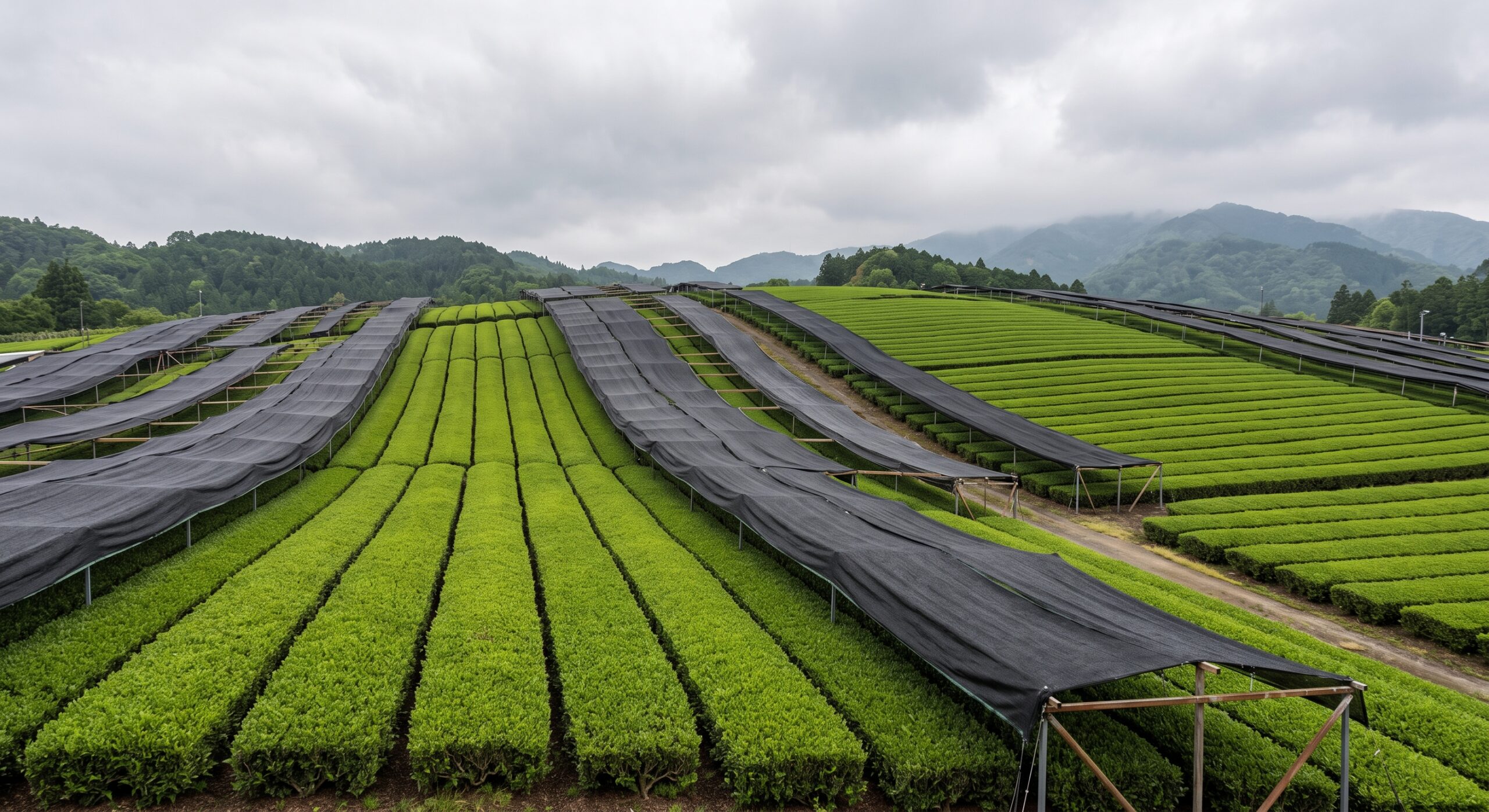
Here’s the thing that surprises most people: matcha and green tea both come from Camellia sinensis, the same tea plant used for black tea, oolong, and basically every “real” tea on earth. So when people ask about matcha and green tea like they’re comparing apples and oranges, it’s really more like comparing a regular apple to one grown under a special tarp and then ground into apple powder. The plant is identical. What happens to it afterward is not.
For regular green tea (sencha is the classic Japanese example), the leaves grow in full sun, get harvested, steamed or pan-fired to stop oxidation, rolled, and dried. You steep the whole leaves in hot water, drink the liquid, and toss the leaves. Simple.
Matcha takes a detour. About three to four weeks before harvest, farmers cover the tea bushes with shade cloth or tarps, blocking most of the sunlight. This stresses the plant into producing more chlorophyll and L-theanine (more on that in a second) to compensate, which is why shade-grown leaves turn a deeper, almost neon green. After harvest, the leaves are steamed, dried, and — critically — have their stems and veins removed before being stone-ground into an extremely fine powder. That powder is matcha. And unlike steeped green tea, you’re drinking the entire ground-up leaf, not just what dissolves out of it.
So What’s the Real Difference Between Matcha and Green Tea?
🍵 Green Tea (like Sencha)
- Grown in full sun
- Steeped as loose leaves, then discarded
- Lighter, grassier, more astringent taste
- Lower caffeine and L-theanine per cup
- Usually $10–20 for a good bag of loose leaf
🍵 Matcha
- Shade-grown for 3–4 weeks before harvest
- Whisked as powder — you consume the whole leaf
- Richer, umami-forward, slightly sweet (when good quality)
- Higher caffeine and L-theanine per cup
- Often $20–40+ for a small tin, ceremonial grade especially
That “you drink the whole leaf” part is really the crux of the matcha and green tea debate. When you steep green tea leaves, you’re only extracting whatever compounds dissolve into the water in a few minutes, and then the bulk of the leaf — fiber, chlorophyll, a good chunk of the catechins — ends up in the compost bin. With matcha, none of that gets left behind, because there’s no leaf left over to throw away. It’s all in the cup.
Matcha vs. Green Tea: Caffeine, Antioxidants, and Nutrition
| Factor | Green Tea (steeped, 8 oz) | Matcha (whisked, 8 oz) |
|---|---|---|
| Caffeine | ~25–40 mg | ~35–70 mg (varies by grade and amount used) |
| L-theanine | Moderate | Notably higher, especially shade-grown ceremonial grade |
| Antioxidants (catechins/EGCG) | Present, but partially left in the discarded leaf | Higher, since the whole leaf is consumed |
| Chlorophyll | Lower (less shading) | Higher (from shade-growing) |
| Prep time | 2–3 min steep | 1–2 min whisking |
The caffeine numbers above are commonly cited ranges, not a strict lab guarantee — actual content swings depending on the specific tea, how much powder or leaf you use, and water temperature. But directionally, matcha tends to hit a bit harder on caffeine while also delivering more L-theanine, the amino acid credited with matcha’s famous “calm, focused” feeling instead of the jittery spike you might get from coffee. That combo is a big reason people specifically seek out matcha instead of just drinking more green tea.
INSERT AFFILIATE LINK/WIDGET HERE (e.g. a ceremonial-grade matcha starter set with a bamboo whisk and sifter for making authentic matcha at home)
Which One Should You Actually Drink?
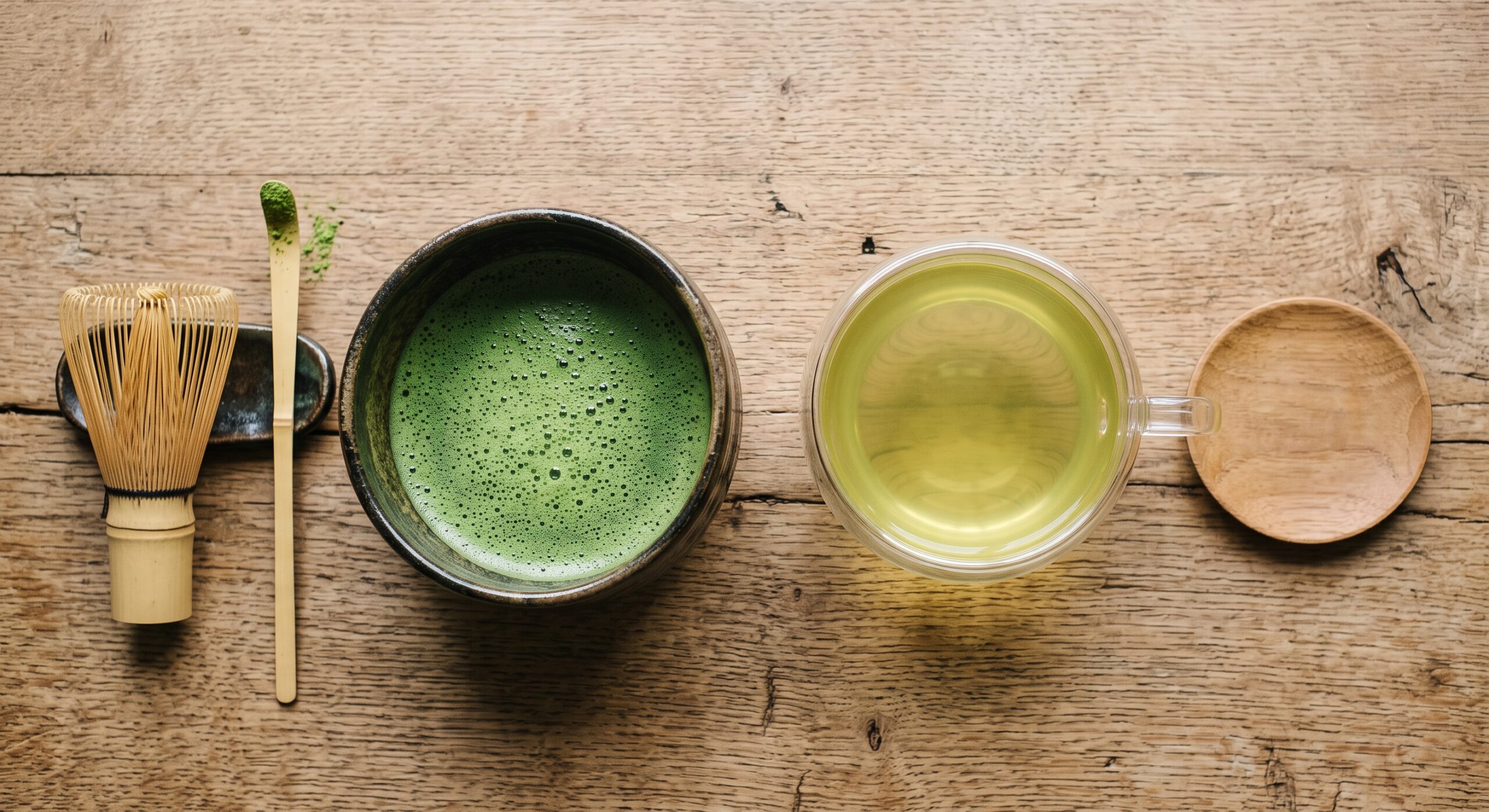
Honestly? There’s no wrong answer here, it just depends on what you’re after. If you want something light, easy to brew, and low-effort — a tea bag and hot water, done — regular green tea is the better everyday choice. It’s also gentler if you’re caffeine-sensitive, since you’re not consuming the whole leaf.
If you want something richer, more ritualistic, and (for a lot of people) more satisfying as an energy source that doesn’t crash halfway through your afternoon, matcha is worth the extra few minutes and extra few dollars. It’s also just a better base for lattes, smoothies, and baking, since the powder blends smoothly into liquids in a way steeped tea leaves obviously can’t.
My honest take after drinking both for years: I keep sencha in the pantry for lazy mornings and matcha for when I actually want to sit down, whisk it properly, and treat it like a five-minute ritual instead of just another beverage.
Does One Have More Health Benefits Than the Other?
Both matcha and green tea are loaded with catechins, especially EGCG (epigallocatechin gallate), the antioxidant compound most of the health research focuses on. Because matcha involves consuming the whole leaf rather than just steeped liquid, several studies and reviews suggest it delivers a meaningfully higher dose of these antioxidants per serving compared to steeped green tea. That said, both are genuinely good choices — you’re not making a “bad” decision by sticking with green tea, you’re just getting a somewhat more concentrated dose with matcha. If you want the full rundown on what the science actually says about matcha specifically, we go deep on that in a separate guide.
INSERT AFFILIATE LINK/WIDGET HERE (e.g. a Kyoto/Uji matcha-tasting day tour via Klook or Viator, for travelers who want to taste the real thing at the source)
Frequently Asked Questions
Is matcha just green tea powder?
Not quite. While matcha is technically a powdered green tea, it comes from specially shade-grown leaves that are deveined and stone-ground, which sets it apart nutritionally and in flavor from just grinding up regular sencha leaves.
Which has more caffeine, matcha or green tea?
Matcha generally has more caffeine per cup than steeped green tea, since you’re consuming the whole leaf rather than just what dissolves into the water during a short steep.
Can I substitute matcha for green tea in recipes, or vice versa?
Not really — matcha dissolves into a smooth powder that works in lattes, baking, and smoothies, while steeped green tea just doesn’t blend the same way. If a recipe calls for matcha, brewed green tea won’t give you the same color, flavor, or texture.
Is matcha or green tea better for weight loss?
Neither is a magic solution, but some research points to catechins (found in higher concentration in matcha, since the whole leaf is consumed) supporting metabolism modestly. It’s a minor supporting factor at best, not a substitute for diet and exercise.
Why is matcha so much more expensive than green tea?
Matcha requires extra labor: shading the plants for weeks before harvest, carefully hand-picking, deveining the leaves, and stone-grinding them into ultra-fine powder (a slow process — traditional stone mills produce only small amounts per hour). All of that adds cost compared to standard green tea processing.
The Bottom Line
Matcha and green tea are made from the same plant, but shade-growing and whole-leaf consumption make matcha richer, more caffeinated, and more expensive than steeped green tea. Neither one is objectively “better” — green tea is the easy, everyday cup, and matcha is the more concentrated, more ritualistic option worth reaching for when you want it. If you’re ever in Japan, tasting an authentic bowl of ceremonial-grade matcha at its source is worth building into your itinerary.







Comments