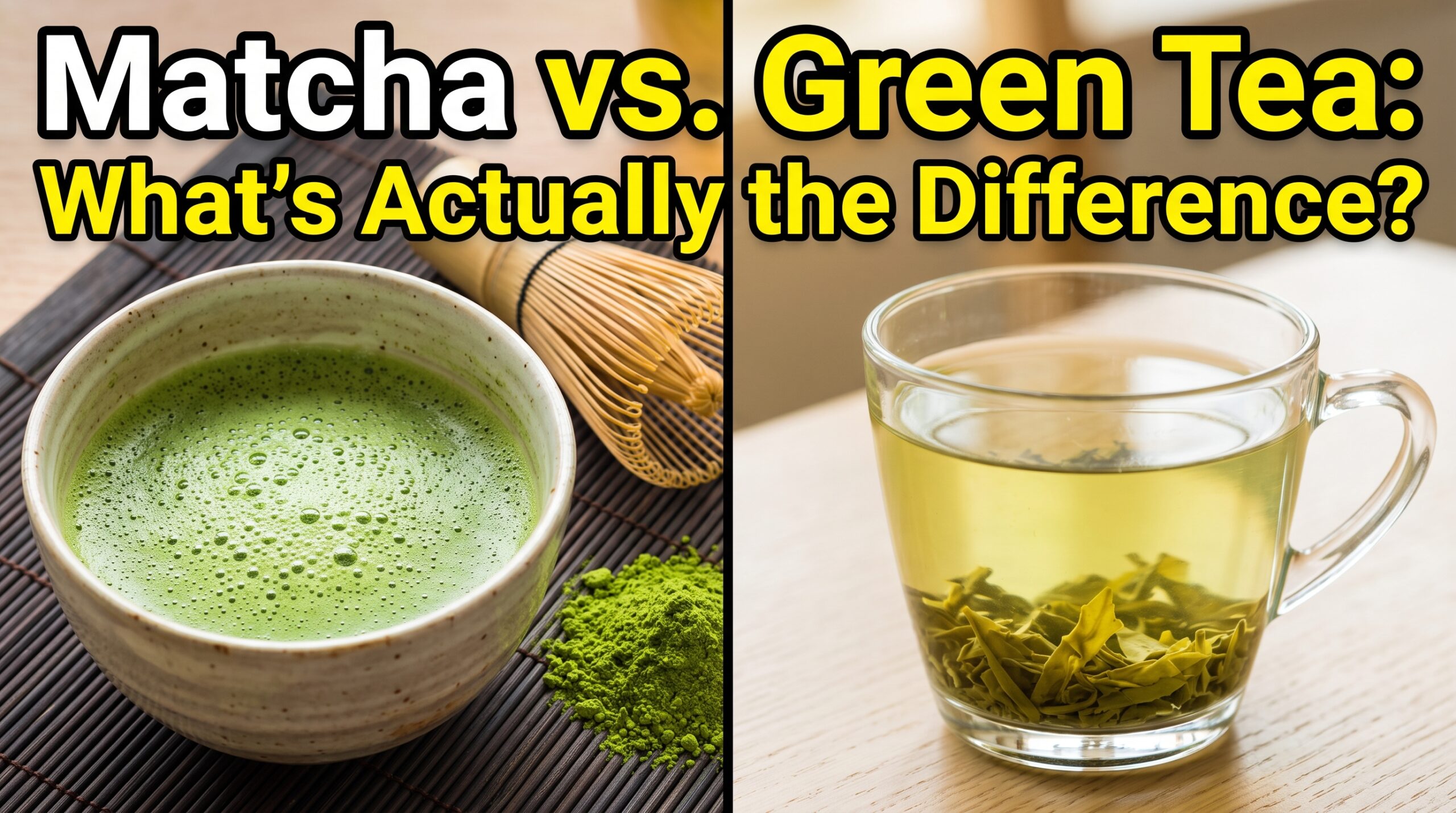
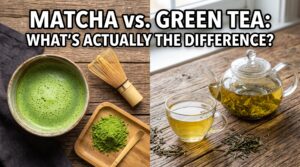
Matcha vs. Green Tea: What’s Actually the Difference?
This post contains affiliate links. If you buy something through one, I may earn a small commission at no extra cost to you. I only recommend things I’d actually use myself.
Here’s the thing that trips up almost everyone the first time they ask about matcha vs green tea: they’re not two different plants. They’re not even two different species. Matcha is green tea — just grown, harvested, and processed in a completely different way that changes the flavor, the nutrition, and the price tag. I remember standing in a tea shop in Kyoto, genuinely confused about why one tin cost three times as much as the other when the label on both just said “green tea.” Turns out that’s a really common question, so let’s clear it up properly.
They’re Actually the Same Plant
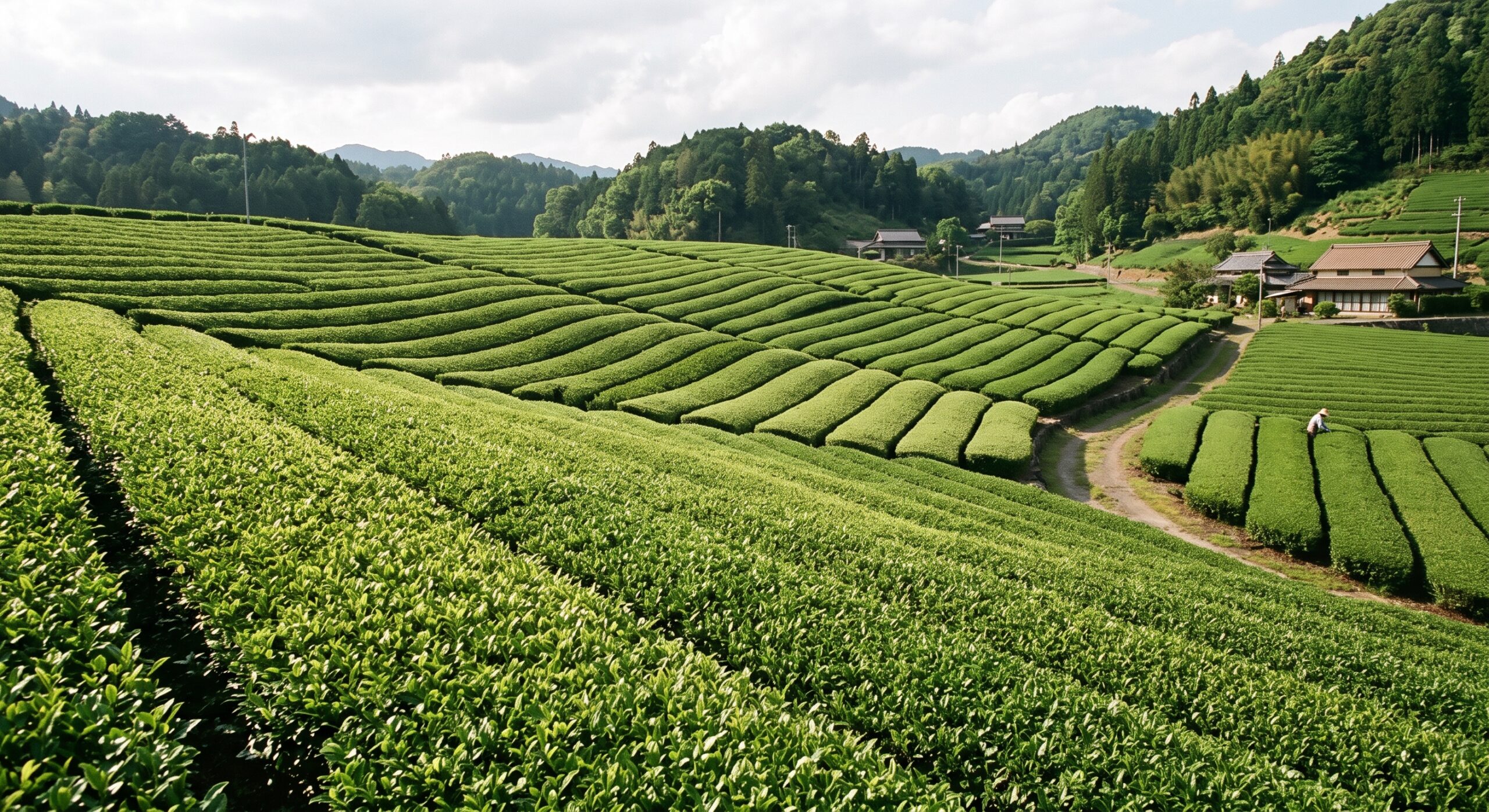
Both matcha and regular green tea (sencha, the loose-leaf stuff you steep in a teapot, is the most common comparison) come from Camellia sinensis, the same tea plant used to make black tea, oolong, and white tea too. The difference isn’t the species — it’s what happens to the leaves after they’re picked. Think of it kind of like grapes: the same fruit can become table grapes, raisins, or wine depending entirely on how it’s handled. Matcha and green tea are that same relationship, just with tea leaves instead of grapes.
So when someone asks “is matcha just green tea powder,” the honest answer is: sort of, but the growing and processing differences are big enough that they taste, behave, and nourish you pretty differently. That’s really the whole story of matcha and green tea — same starting point, very different journeys.
How Matcha Is Grown Differently
This is where things actually start to diverge, and it happens before the leaves are even picked. About three to four weeks before harvest, matcha plants get covered — with bamboo mats, shade cloth, or straw — blocking most of the direct sunlight. Regular green tea plants grow right out in the open sun the whole time.
Why bother shading it? A few reasons, and they all show up later in your cup:
🍵 Matcha (Shade-Grown)
- Shaded for ~3–4 weeks before harvest
- Boosts chlorophyll → deep green color
- Boosts L-theanine → smoother, less bitter, calmer buzz
- Leaves hand-picked, steamed, dried into “tencha,” then stone-ground into powder
🌱 Green Tea (Sun-Grown)
- Grown in full or partial sun the whole cycle
- Lower chlorophyll → lighter, more yellow-green color
- Higher natural bitterness/astringency from catechins
- Leaves steamed or pan-fired, rolled, and dried whole or cut into loose leaf
That shading step is also the reason ceremonial-grade matcha has that famously vivid, almost neon green color — the chlorophyll spike is doing a lot of visual work, on top of the flavor changes.
INSERT AFFILIATE LINK/WIDGET HERE (e.g. a ceremonial-grade matcha starter set with whisk and sifter, for readers who want to try the real shade-grown stuff at home)
The Processing Difference: Powder vs. Steeped Leaves
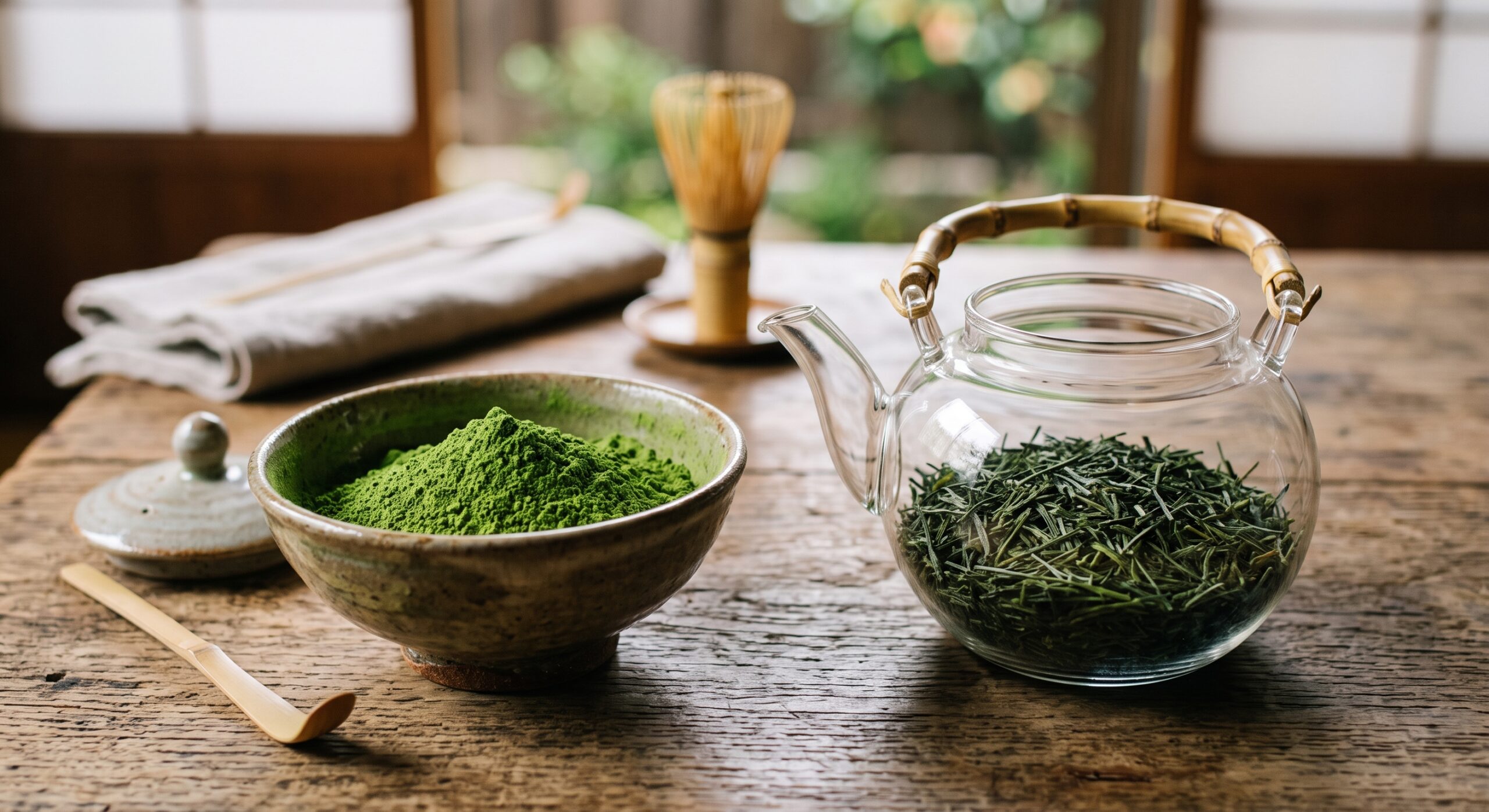
Here’s the part that actually matters most for nutrition, and it’s simple once you see it: when you steep green tea, you’re steeping the leaf and then throwing the leaf away. You only get whatever nutrients dissolved into the water during those few minutes. When you drink matcha, you’re whisking the entire ground-up leaf into your water and drinking all of it — nothing gets tossed.
| Step | Matcha | Green Tea (Sencha) |
|---|---|---|
| Growing | Shaded 3–4 weeks before harvest | Grown in full sun |
| Harvest form | Hand-picked, steamed, dried into tencha | Steamed/pan-fired, rolled, dried |
| Final form | Stone-ground into fine powder | Whole or cut loose leaves |
| How it’s consumed | Whisked into water/milk, whole leaf ingested | Steeped in hot water, leaves discarded |
| Prep time | 1–2 minutes (whisking) | 2–5 minutes (steeping) |
That “whole leaf vs. discarded leaf” distinction is why matcha is so often described as more concentrated — you’re simply getting more of the plant’s actual content per cup, not because matcha is some entirely different substance.
Nutrition & Caffeine Showdown
This is probably the single most common question I get asked, so let’s actually put some numbers next to it instead of just saying “matcha has more caffeine” and leaving it there.
Antioxidant content follows a similar logic. Matcha typically contains meaningfully higher levels of catechins (including EGCG, the compound most tea research focuses on) simply because whole-leaf consumption captures more of what’s in the plant. Matcha also tends to have a higher concentration of L-theanine, the amino acid credited with green tea’s “calm alertness” effect — partly from the shade-growing process and partly, again, from drinking the whole leaf.
None of this makes green tea nutritionally weak, to be clear — it’s still a genuinely healthy drink with real research behind it. Matcha is just more concentrated across the board because of how it’s grown and consumed.
Taste & Texture: What’s the Actual Experience Like?
Green tea, brewed properly (not scalded with boiling water, which is a rookie mistake I made for years), tastes grassy, a little vegetal, sometimes with a light sweetness and a clean, brothy finish. It’s a thin, tea-colored liquid you sip.
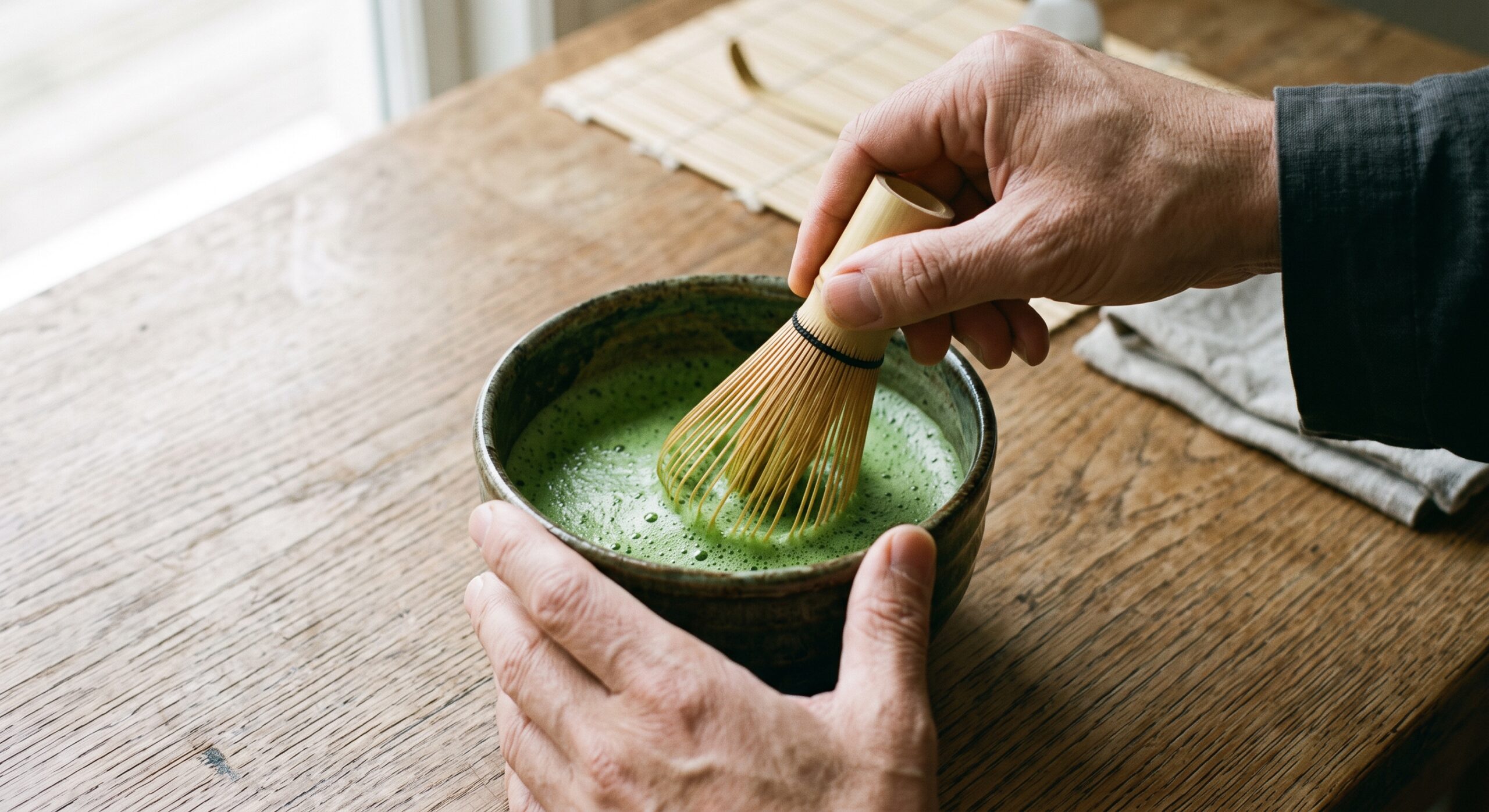
Matcha is a completely different sensory experience. It’s thick — almost frothy once whisked — with a rich, umami-forward flavor that’s intensely “green” in a way that can genuinely surprise first-timers. Good ceremonial-grade matcha has a natural sweetness underneath the vegetal notes and almost no bitterness; lower-grade or badly-stored matcha can taste flat or harsh, which is honestly the reason a lot of people think they “don’t like matcha” when what they actually tried was just poor-quality powder.
If you’ve only ever had a bottled “matcha latte” from a coffee chain, you genuinely haven’t tried real matcha yet — that’s a whole different animal, usually sweetened way past the point where you can taste the tea itself.
INSERT AFFILIATE LINK/WIDGET HERE (e.g. a Klook or Viator-listed matcha tasting or tea ceremony experience in Kyoto/Uji for travelers who want to taste the real thing on-site)
Frequently Asked Questions
Is matcha just green tea powder?
Not exactly. While matcha comes from the same plant as green tea, it’s grown under shade, processed differently (dried into tencha, then stone-ground), and consumed as a whole-leaf powder rather than steeped and discarded. Those differences change the nutrition, caffeine content, and flavor enough that they’re worth treating as distinct products, even though they share a plant of origin.
Which has more caffeine, matcha or green tea?
Matcha generally has more caffeine per serving — roughly 35–70mg versus about 25–35mg for steeped green tea — mainly because you consume the entire ground leaf with matcha instead of just what dissolves into the water during steeping.
Can I substitute green tea leaves for matcha powder in a recipe?
Not really. Regular green tea leaves aren’t ground fine enough to dissolve smoothly, and they weren’t grown or processed to be consumed whole, so texture and taste will be off. If a recipe calls for matcha, it’s worth using actual culinary-grade matcha powder rather than substituting.
Is matcha healthier than green tea?
Matcha tends to offer more concentrated antioxidants, L-theanine, and caffeine per serving because you’re consuming the whole leaf rather than just steeped water. That said, green tea is still a well-researched, genuinely healthy drink on its own — “more concentrated” isn’t the same as “the only healthy option.”
Why is matcha so much more expensive than green tea?
Matcha requires extra labor at every step — weeks of shading, hand-harvesting, careful steaming and drying into tencha, and slow stone-grinding (a traditional stone mill produces only a small amount of matcha per hour). Regular green tea skips the shading and can be processed and rolled by machine much faster, which keeps costs down.
The Bottom Line
Matcha and green tea start from the exact same plant, but shade-growing, whole-leaf processing, and whole-leaf consumption turn matcha into a more concentrated, more caffeinated, more nutrient-dense (and more expensive) version of the same base ingredient. Neither one is “better” across the board — it really comes down to whether you want a light, steeped everyday tea or a rich, ritual-style whisked drink with a bigger nutritional and caffeine punch.


Comments