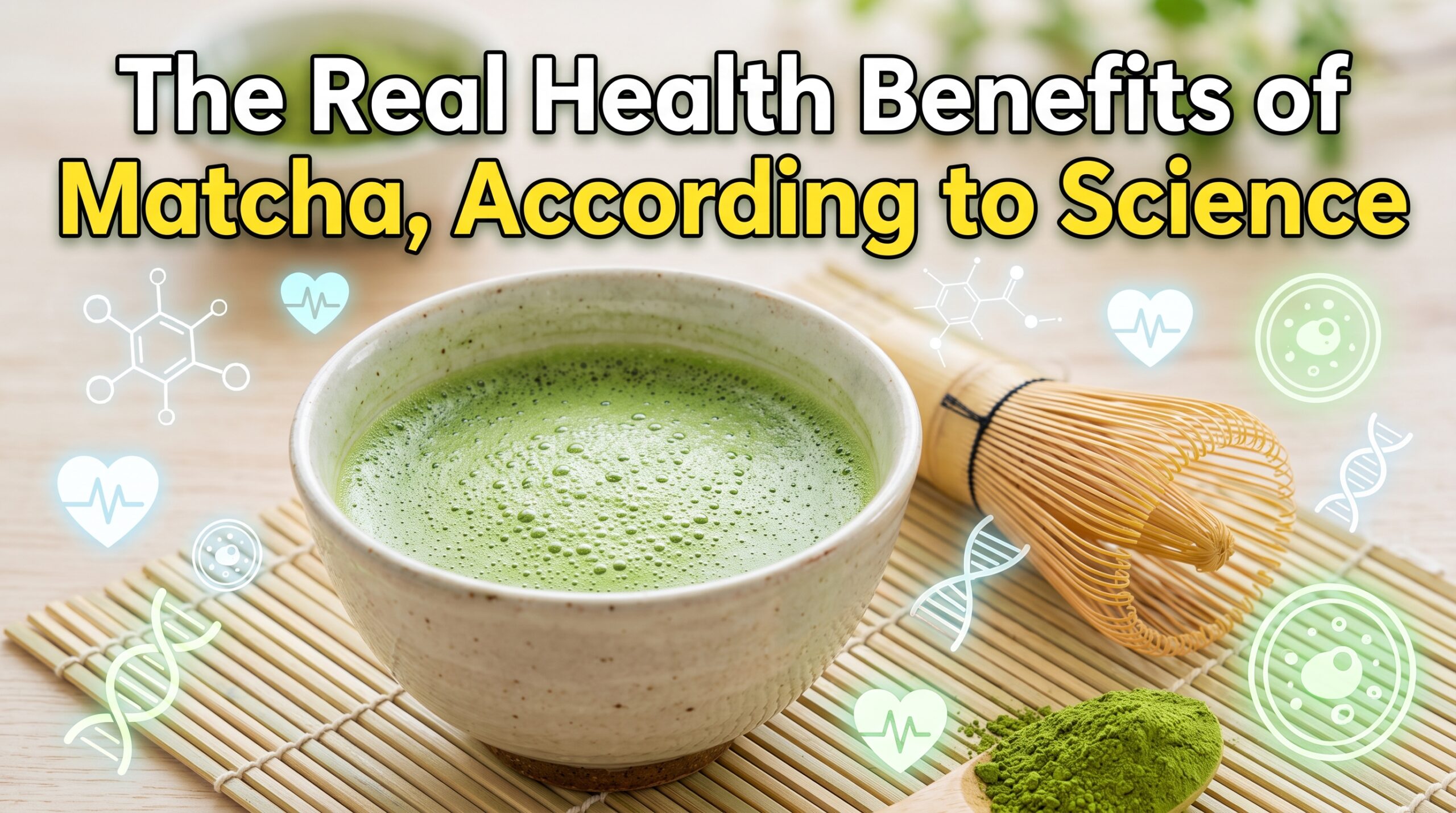
The Real Health Benefits of Matcha, According to Science
This post contains affiliate links. If you buy something through one, I may earn a small commission at no extra cost to you. This article is for general information only and isn’t medical advice — talk to a doctor about your own health situation, especially if you’re pregnant, on medication, or managing a health condition.
Every few months matcha shows up in my feed again with some bold new claim attached — “cures inflammation,” “melts fat,” “detoxes your liver.” I love matcha, I drink it most mornings, but a lot of that stuff is marketing dressed up as science. So I actually went and looked at what the research says about matcha health benefits, separating what’s reasonably well-supported from what’s still speculative. Here’s the honest version.
Matcha Is Genuinely Loaded With Antioxidants
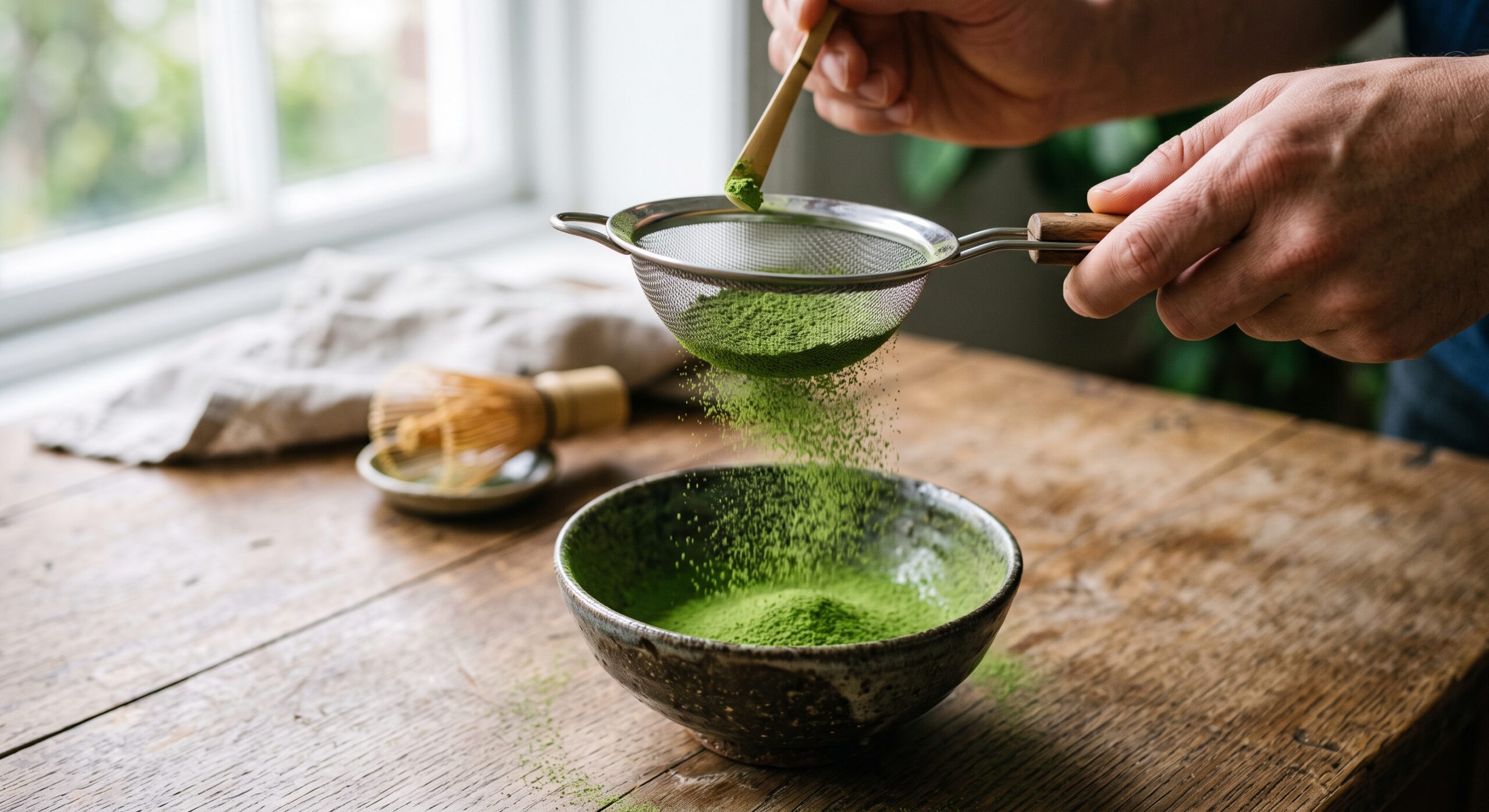
This is the one part of matcha’s reputation that’s on genuinely solid ground. Matcha is unusually rich in catechins — a category of plant antioxidant — and specifically in one called EGCG (epigallocatechin gallate), which shows up constantly in tea research. Because you’re whisking and drinking the whole ground leaf instead of steeping and discarding it, matcha delivers meaningfully more of these compounds per cup than regular steeped green tea does.
Antioxidants like EGCG help neutralize free radicals — unstable molecules linked to cellular damage and, over the long term, to things like inflammation and aging. That’s a well-established mechanism in nutrition science. Where it gets murkier is jumping from “matcha contains a lot of a beneficial compound” to “matcha treats or prevents specific diseases” — most of the strongest EGCG research has been done in lab and animal studies or smaller human trials, not the kind of large, long-term human trials that let researchers make confident real-world claims. So: genuinely antioxidant-rich, yes. A guaranteed disease-fighter, not proven at that level yet.
The Caffeine + L-Theanine Combo (Calm, Focused Energy)
This is the matcha benefit I personally notice the most, and it’s also one of the better-supported ones. Matcha naturally contains both caffeine and L-theanine, an amino acid that’s been shown in research to promote relaxation without drowsiness. Several studies suggest caffeine and L-theanine together may produce steadier, calmer focus than caffeine alone — theoretically because L-theanine takes some of the edge off caffeine’s jittery, spiking effect.
☕ Coffee
- Higher caffeine per cup, faster spike
- No meaningful L-theanine
- Can cause jitteriness or a harder crash for sensitive people
🍵 Matcha
- Moderate caffeine (~35–70mg per serving)
- Naturally high in L-theanine
- Often described as a smoother, steadier energy curve
To be fair here: “smoother energy” is partly subjective and individual response varies a lot. But the caffeine-plus-L-theanine mechanism itself is genuinely backed by research, which is more than you can say for most wellness trends.
INSERT AFFILIATE LINK/WIDGET HERE (e.g. a ceremonial-grade matcha tin or starter kit for readers who want to try the caffeine + L-theanine combo themselves)
Potential Support for Heart Health

Green tea catechins, including the ones concentrated in matcha, have been studied for their relationship to cardiovascular markers — things like LDL (“bad”) cholesterol and blood pressure. Some research on green tea consumption has associated regular intake with modestly better cholesterol profiles and blood vessel function, and matcha, given its concentrated catechin content, is often assumed to carry similar or amplified effects.
The honest caveat: a lot of this evidence comes from studying green tea broadly rather than matcha specifically, and “associated with” isn’t the same as “proven to cause.” Diet, genetics, exercise, and dozens of other factors all affect heart health at once, so no tea — matcha included — is a substitute for the basics: a reasonably balanced diet, regular movement, and not smoking.
Metabolism & Weight Management: What’s Actually Supported
This is probably the most oversold matcha claim out there, so let’s be precise about it. Some studies on green tea catechins (particularly EGCG) combined with caffeine have shown small increases in metabolic rate and fat oxidation during exercise, in controlled settings. That’s a real, measurable effect — but it’s a modest one, not a “drink this and melt fat” effect.
| Claim | What research actually shows |
|---|---|
| “Matcha boosts metabolism” | Small, measurable increase in calorie burn shown in some studies — modest, not dramatic |
| “Matcha burns fat directly” | Some evidence for increased fat oxidation during exercise; not a stand-alone fat-loss mechanism |
| “Matcha alone causes weight loss” | Not supported — weight change depends on overall diet and activity, not one beverage |
Immune Support, Skin, and Other Claims
Matcha also gets credit for supporting immune function and skin health, largely because of its overall antioxidant and polyphenol content, plus a reasonable dose of vitamin C and some trace minerals. These claims are plausible in the sense that antioxidants generally play a supportive role in immune and skin health across nutrition science — but this is one of the areas with the least matcha-specific research, as opposed to general green-tea-and-health research applied loosely to matcha.
My honest take after digging through this: treat matcha as a genuinely nutrient-dense, antioxidant-rich beverage that fits well into a healthy lifestyle — not as a cure, treatment, or substitute for medical care. If you enjoy the taste and the steady-energy feeling, that alone is a great reason to keep drinking it.
INSERT AFFILIATE LINK/WIDGET HERE (e.g. a Klook or GetYourGuide-listed matcha farm tour or tea ceremony experience in Uji/Kyoto for travelers who want to see where it’s actually grown)
Frequently Asked Questions
Is matcha actually good for you, or is it hype?
Both, honestly. Matcha is genuinely rich in antioxidants (especially EGCG) and contains a well-studied caffeine/L-theanine combination linked to calmer, steadier energy. But some claims — like guaranteed weight loss or disease cures — go well beyond what current research actually supports.
Does matcha help with weight loss?
Some studies show a small increase in metabolic rate and fat oxidation from green tea catechins and caffeine, matcha included. It’s a modest effect, not a stand-alone weight-loss solution — overall diet and activity levels matter far more.
How much matcha is safe to drink per day?
Most healthy adults tolerate 1–2 cups (roughly 2–4 grams of powder) a day without issue, similar to general caffeine guidelines for tea and coffee. People who are pregnant, caffeine-sensitive, or managing a health condition should check with a doctor about an appropriate amount for them.
Are the health benefits of matcha better than regular green tea?
Matcha generally delivers more concentrated antioxidants, caffeine, and L-theanine per serving because you consume the whole leaf rather than steeped water alone. That makes it more potent per cup, but it doesn’t mean steeped green tea lacks real, well-documented health benefits of its own.
Can matcha replace my medication or treat a health condition?
No. Matcha may support general wellness as part of a healthy diet, but it isn’t a treatment or cure for any medical condition, and it shouldn’t replace medication or professional medical advice. Talk to a healthcare provider about any specific health concerns.
The Bottom Line
Matcha’s antioxidant content and its caffeine-plus-L-theanine combination are genuinely backed by research, and both are good reasons to enjoy it regularly. The heart-health and metabolism benefits are real but modest, and claims about guaranteed weight loss, detoxing, or disease-curing go further than the current science supports. Enjoy matcha as a delicious, nutrient-dense part of a balanced routine — not as a magic fix.





Comments